Slide Solve Discover
Overview
BRIEF: Develop an interactive design intervention that encourages students and designers to understand, reflect on, and internalize the Ethics of Design. The challenge was to go beyond static documents and to craft an engaging, memorable experience that makes ethical awareness an active part of everyday learning and decision-making.
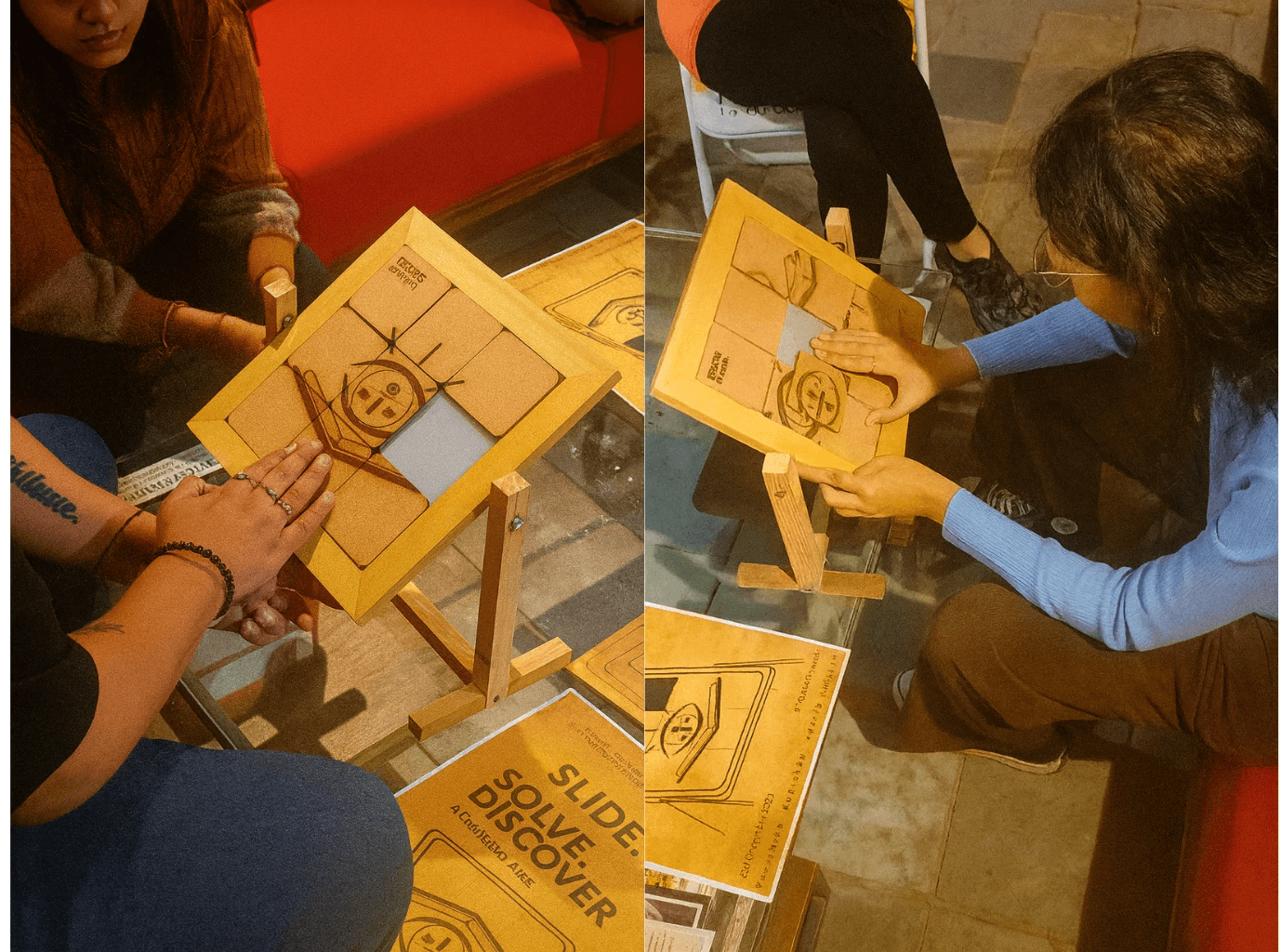
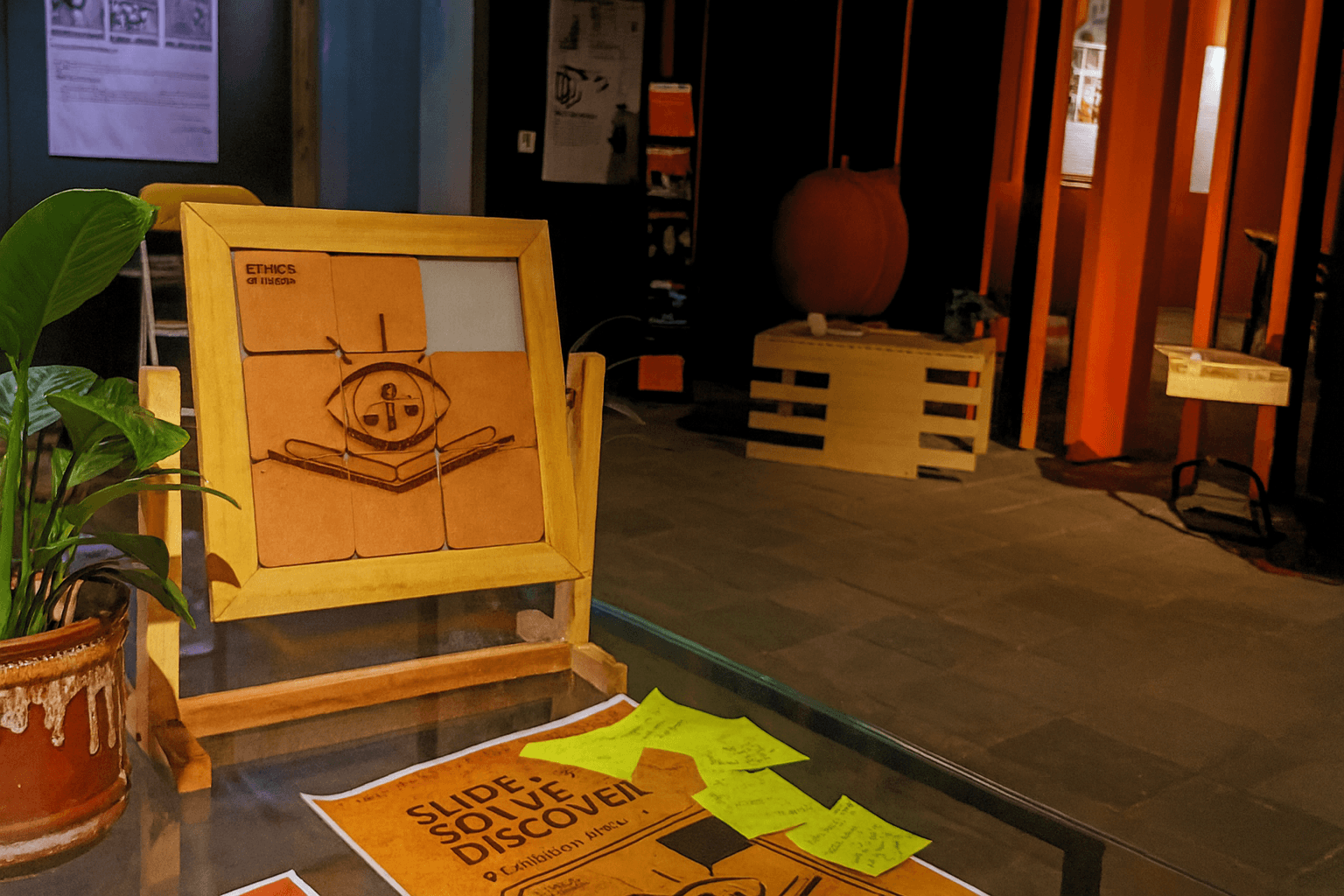
CONCEPT: Our intervention reframes ethical learning as one of discovery rather than instruction. Drawing inspiration from the metaphor of ethics as a lifelong puzzle, we designed a hands-on sliding-puzzle in which users move around pieces to reveal and interpret the Code of Ethics. Sliding, aligning, and solving evokes the continuous and adaptive nature of ethical understanding shaped by personal introspection, experiences, and choices.
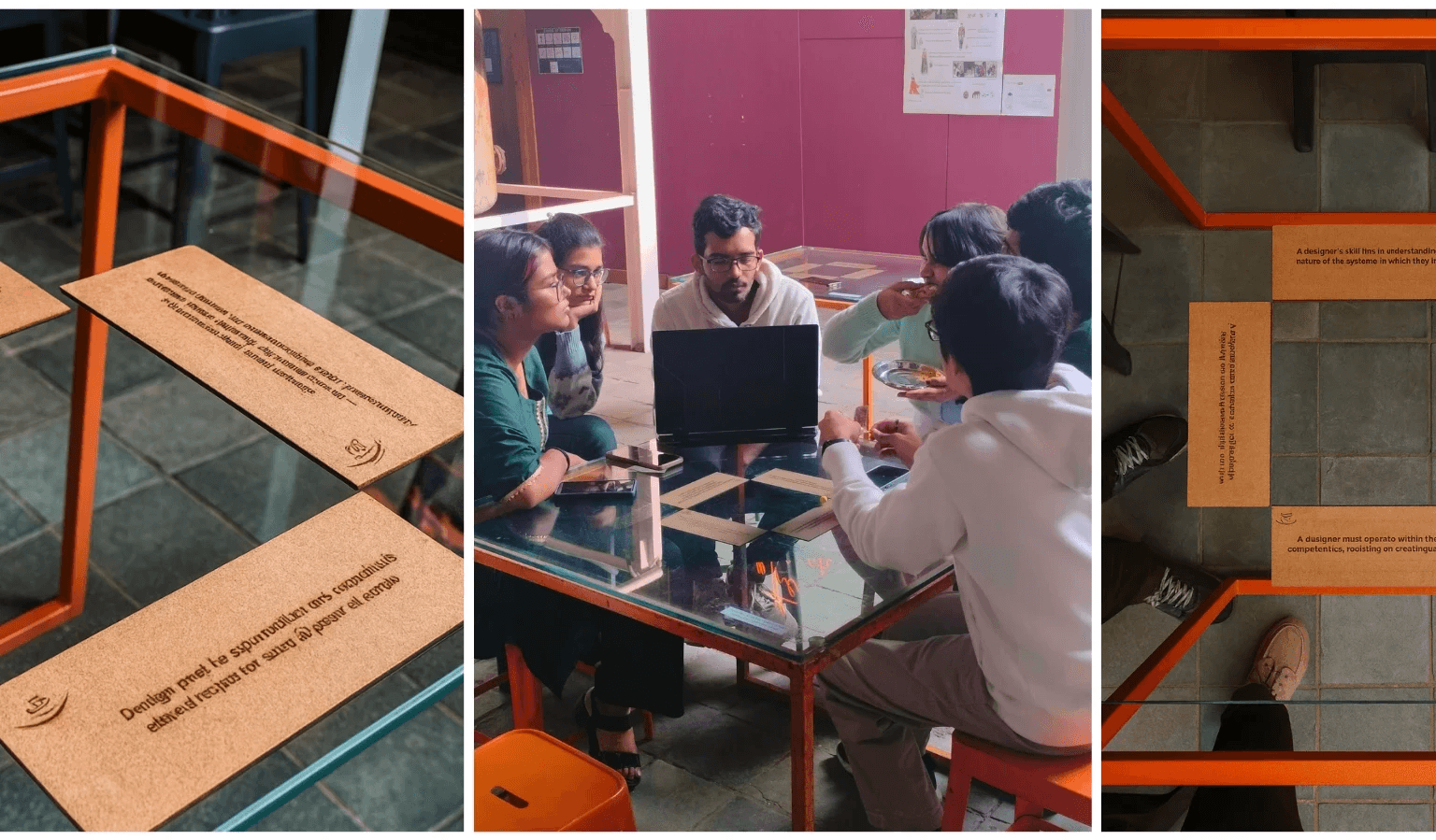
To make the reinforcement of long-term memories stronger, we supported the exhibit with subtle yet strategic placement of ethics table templates in dining and work areas. These templates are quiet reminders that are unavoidable, repeatedly encountered, and absorbed little by little over time. The intervention blends playfulness with purpose, transforming ethics from a passive set of rules into a reflective, participatory experience integrated into daily life.
OUTCOME: In this way, the intervention makes the Code of Ethics accessible, interactive, and memorable. The sliding puzzle provokes curiosity for active participation, while the table templates ensure repeated exposure to the content for subconscious internalization. Together, they foster a culture of mindful design practice that allows people to recognize diverse perspectives, identify genuine needs, stay informed, and act responsibly on their creative journeys. Ethics ceases to be just a document; it becomes an embodied, evolving aspect of one’s design thinking.
Categories
Code Of Ethics
Game Design
Timeline
2 Days
Type
Group Project
Client
Self driven
Slide Solve Discover
Overview
BRIEF: Develop an interactive design intervention that encourages students and designers to understand, reflect on, and internalize the Ethics of Design. The challenge was to go beyond static documents and to craft an engaging, memorable experience that makes ethical awareness an active part of everyday learning and decision-making.
CONCEPT: Our intervention reframes ethical learning as one of discovery rather than instruction. Drawing inspiration from the metaphor of ethics as a lifelong puzzle, we designed a hands-on sliding-puzzle in which users move around pieces to reveal and interpret the Code of Ethics. Sliding, aligning, and solving evokes the continuous and adaptive nature of ethical understanding shaped by personal introspection, experiences, and choices.
To make the reinforcement of long-term memories stronger, we supported the exhibit with subtle yet strategic placement of ethics table templates in dining and work areas. These templates are quiet reminders that are unavoidable, repeatedly encountered, and absorbed little by little over time. The intervention blends playfulness with purpose, transforming ethics from a passive set of rules into a reflective, participatory experience integrated into daily life.
OUTCOME: In this way, the intervention makes the Code of Ethics accessible, interactive, and memorable. The sliding puzzle provokes curiosity for active participation, while the table templates ensure repeated exposure to the content for subconscious internalization. Together, they foster a culture of mindful design practice that allows people to recognize diverse perspectives, identify genuine needs, stay informed, and act responsibly on their creative journeys. Ethics ceases to be just a document; it becomes an embodied, evolving aspect of one’s design thinking.
Categories
Code Of Ethics
Game Design
Timeline
2 Days
Type
Group Project
Client
Self driven
Slide Solve Discover
Overview
BRIEF: Develop an interactive design intervention that encourages students and designers to understand, reflect on, and internalize the Ethics of Design. The challenge was to go beyond static documents and to craft an engaging, memorable experience that makes ethical awareness an active part of everyday learning and decision-making.
CONCEPT: Our intervention reframes ethical learning as one of discovery rather than instruction. Drawing inspiration from the metaphor of ethics as a lifelong puzzle, we designed a hands-on sliding-puzzle in which users move around pieces to reveal and interpret the Code of Ethics. Sliding, aligning, and solving evokes the continuous and adaptive nature of ethical understanding shaped by personal introspection, experiences, and choices.
To make the reinforcement of long-term memories stronger, we supported the exhibit with subtle yet strategic placement of ethics table templates in dining and work areas. These templates are quiet reminders that are unavoidable, repeatedly encountered, and absorbed little by little over time. The intervention blends playfulness with purpose, transforming ethics from a passive set of rules into a reflective, participatory experience integrated into daily life.
OUTCOME: In this way, the intervention makes the Code of Ethics accessible, interactive, and memorable. The sliding puzzle provokes curiosity for active participation, while the table templates ensure repeated exposure to the content for subconscious internalization. Together, they foster a culture of mindful design practice that allows people to recognize diverse perspectives, identify genuine needs, stay informed, and act responsibly on their creative journeys. Ethics ceases to be just a document; it becomes an embodied, evolving aspect of one’s design thinking.
Categories
Code Of Ethics
Game Design
Timeline
2 Days
Type
Group Project
Client
Self driven